
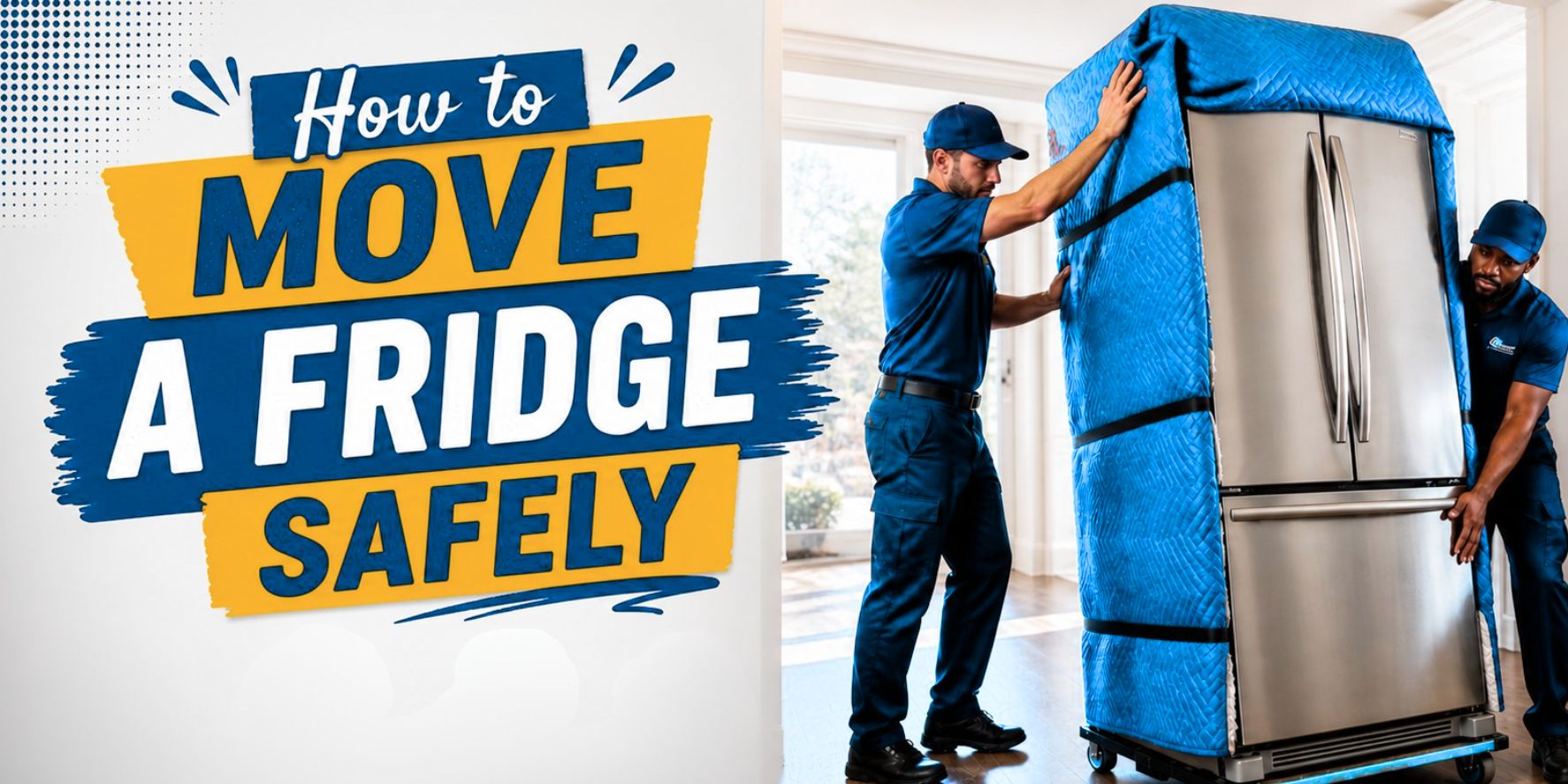
How to Move a Fridge Safely: The Complete Guide
 Megashift
 Ever tried moving a fridge during a house move in South Africa and thought it would be quick and simple until it got stuck in a doorway or left marks on your floors? It is in those first few minutes that most of the damage occurs, often because of small decisions made in a rush.
The reality is, moving a fridge is not difficult, but it does require the right approach, proper equipment, and a clear sequence. In this guide, you will learn the exact steps professionals follow, including preparation, safe transport, floor protection, and how long to wait before plugging your fridge back in without risk.
Equipment You Actually Need
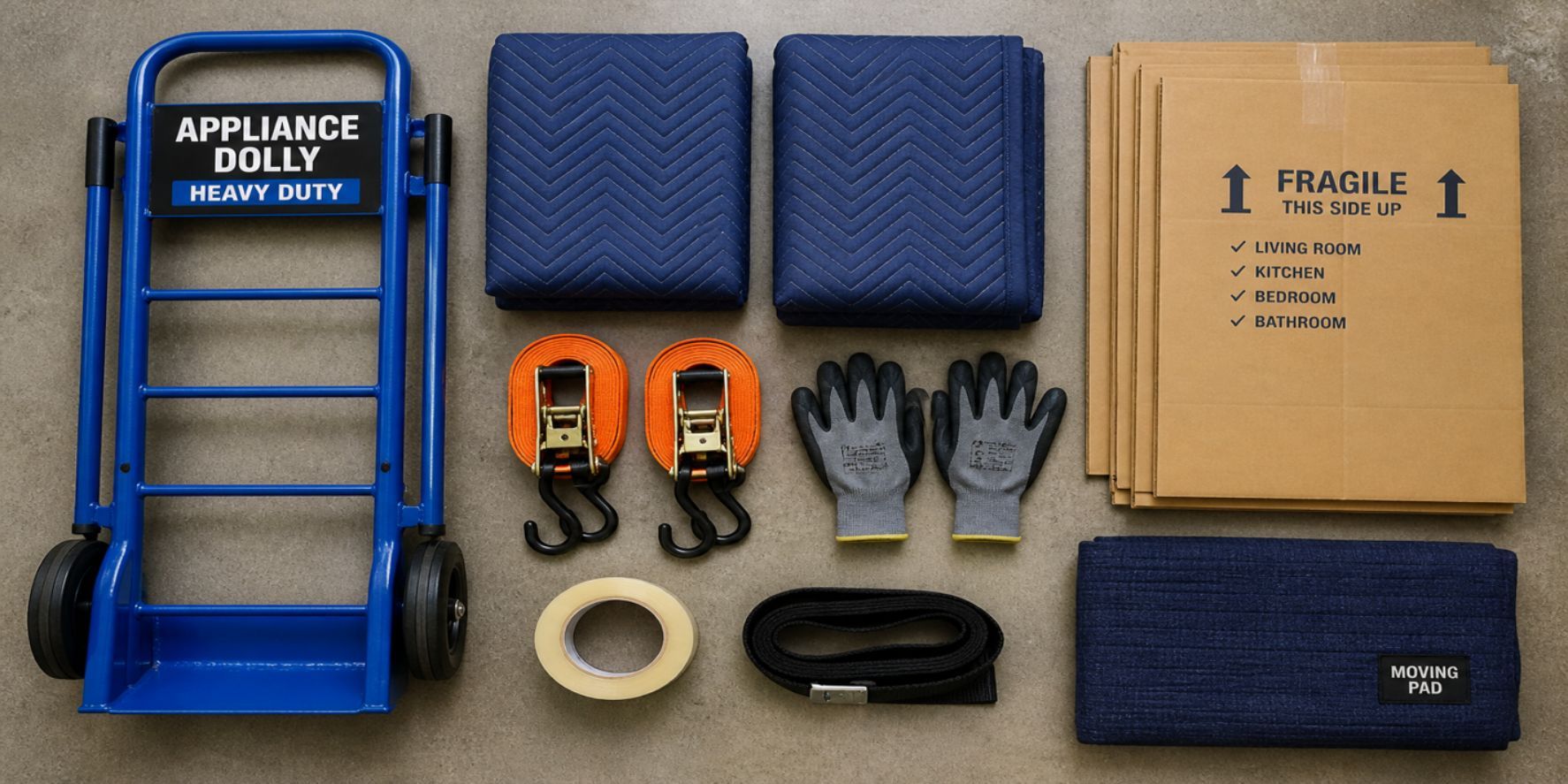
Before you touch the fridge, sort your equipment. This is where DIY moves fall apart. People improvise and then wonder why a R12,000 appliance is sitting dead in a new kitchen.
- Appliance dolly (trolley): Not a standard moving dolly. An appliance dolly is built specifically for tall, heavy loads, with a full back frame for support and integrated strap points. Most hardware stores across South Africa rent these by the day for around R150 to R250. That is the cheapest insurance you will ever buy.
- Ratchet straps (two minimum): Cargo straps that only hold by friction are not adequate for a fridge on a dolly. Ratchet straps lock under load and do not slip.
- Moving blankets or thick towels: To protect the fridge exterior and prevent doorframes and walls from getting marked as the appliance passes through.
- Cardboard or hardboard sheets: Lay a continuous path from the kitchen to the exit. On tiles, vinyl, or laminate, a fridge without floor protection will leave marks that do not buff out.
- A second person: This is not optional. A full-size fridge cannot be moved safely by one person. A full-size fridge cannot be moved safely by one person. If you are alone, reschedule.
- Masking tape or soft packing straps: To secure the door shut during transit. Do not use duct tape directly on the cabinet surface. It pulls the finish when removed.
If you cannot get an appliance dolly, stop here. This is the single piece of equipment that makes the rest of the process manageable. Without it, you are asking two people to hand-carry a 60 to 90 kg object through a house, around corners, and potentially down steps. That is how injuries happen and how door hinges get ripped off. Call a professional, or hire the dolly first.
How to Prepare Your Fridge for Moving
Start this process 24 to 48 hours before the move. Not the morning of. Not the night before if you have a large freezer compartment. Preparation done too late creates problems that cannot be fixed on the day.
Step 1: Empty It Completely
Remove everything including shelves, drawers, and door compartments. Wrap glass parts individually, as they are heavier than they look and break easily, so it’s important to pack fragile items safely to avoid damage during the move.
Step 2: Switch Off and Defrost with Enough Lead Time
Turn the fridge off at least 24 hours before moving, or 36 hours for large freezers. Lay towels around the base to catch meltwater. Moving a fridge with ice inside leads to leaks and extra weight.
Step 3: Clean and Dry the Interior
Once defrosted, wipe the interior down with a mild cleaning solution. Then leave the doors open for several hours until the interior is completely dry. Even a thin film of moisture trapped inside during transit will develop into mould within a few days. Whirlpool’s refrigerator maintenance guidance confirms that moisture left unchecked in an enclosed fridge interior leads directly to mould growth (Whirlpool: how to clean a refrigerator), and in a sealed, unventilated appliance during a multi-hour move, the conditions are ideal for exactly that. Once mould establishes itself inside a refrigerator, you are effectively looking at replacing the appliance. The smell does not come out.
Step 4: Secure the Doors
Use masking tape or soft packing straps across the doors, not duct tape. Duct tape adhesive bonds to the fridge cabinet over time, especially in heat, and damages the finish and seal gasket when it is pulled off.
Step 5: Manage the Power Cord
Coil the cord and tape it securely to the back of the unit. A loose cord catches on doorframes and skirting boards, and creates a trip hazard for the crew.
How to Move a Fridge: Step-by-Step
Once the fridge is prepared, the move itself follows a fixed sequence. Each step exists for a reason. The steps that people skip are the ones they later wish they had not.
Step 1: Measure Before You Touch It
Check the fridge dimensions against every doorway, corridor, and stairwell on the route. In South Africa, older homes (particularly pre-1980s stock in Cape Town’s suburbs and Johannesburg’s northern areas) regularly have internal doorways as narrow as 750 to 780 mm. A standard double-door fridge is 900 mm wide. You may need to remove doors from their hinges. Find this out before the fridge is on the dolly, not after.
Step 2: Protect the Floors Before Anything Moves
Lay cardboard or hardboard sheets from the kitchen to the exit. Make it a continuous surface. Even a fridge on a dolly, if it rolls over a bare tile edge, can chip or crack the tile. On laminate and vinyl, the wheel track itself leaves marks. Floor protection is not optional, and proper planning like this plays a big role in maintaining a smooth process, especially if you follow practical stress free house moving tips.
Step 3: Tilt, Place the Dolly, and Secure Before Moving an Inch
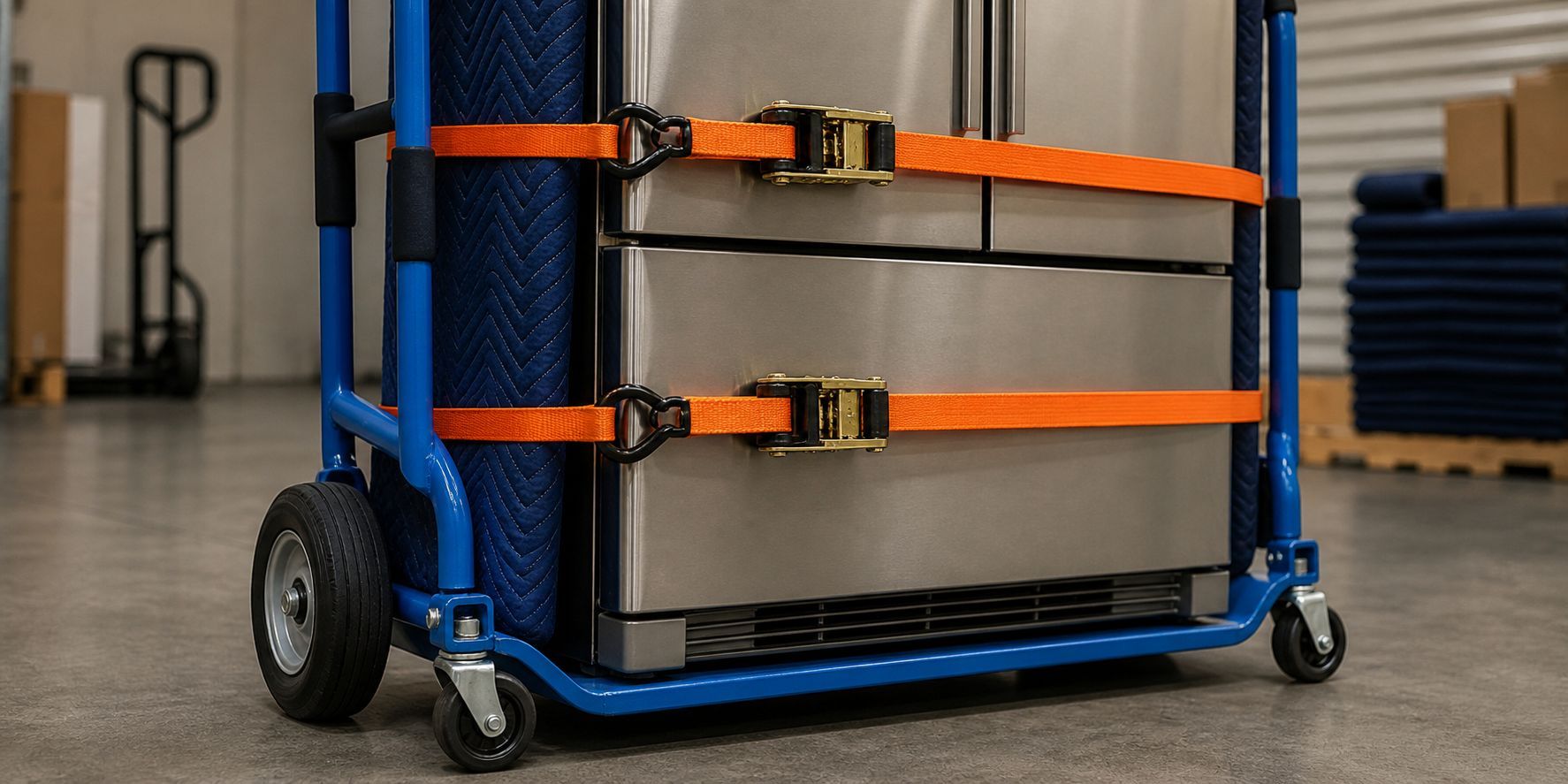
One person tilts the fridge slightly backward from the top. The other slides the dolly base underneath from the front. Do not tip more than 45 degrees. Once the base is seated, apply the ratchet straps immediately. Do not move until the fridge is fully secured to the dolly. The strap points should be around the dolly frame and the fridge body, not around handles or door components.
Apply light sideways pressure to test. If the fridge shifts at all, re-strap before moving.
Step 4: One Person Steers, One Person Guides
The person at the back of the dolly controls direction and braking. The person in front faces the direction of travel, watches for obstacles, and calls out every corner, threshold, and step. They do not pull. Communication is constant.
Step 5: Stairs Require a Stair-Climbing Dolly
A standard appliance dolly is not designed for stairs. For any staircase (up or down) you need a stair-climbing dolly with a tri-wheel or stairclimber wheel cluster. Tilt the fridge weight back against the dolly’s support frame and descend one step at a time, with the front person acting as a controlled brake. The front person slows the descent. They do not carry the load.
If the only dolly available is a standard flat-base model and there are stairs involved, stop and call professionals. Losing control on a staircase with an unsecured 80 kg load is not a recoverable situation.
How to Transport a Fridge: Bakkie vs Moving Truck
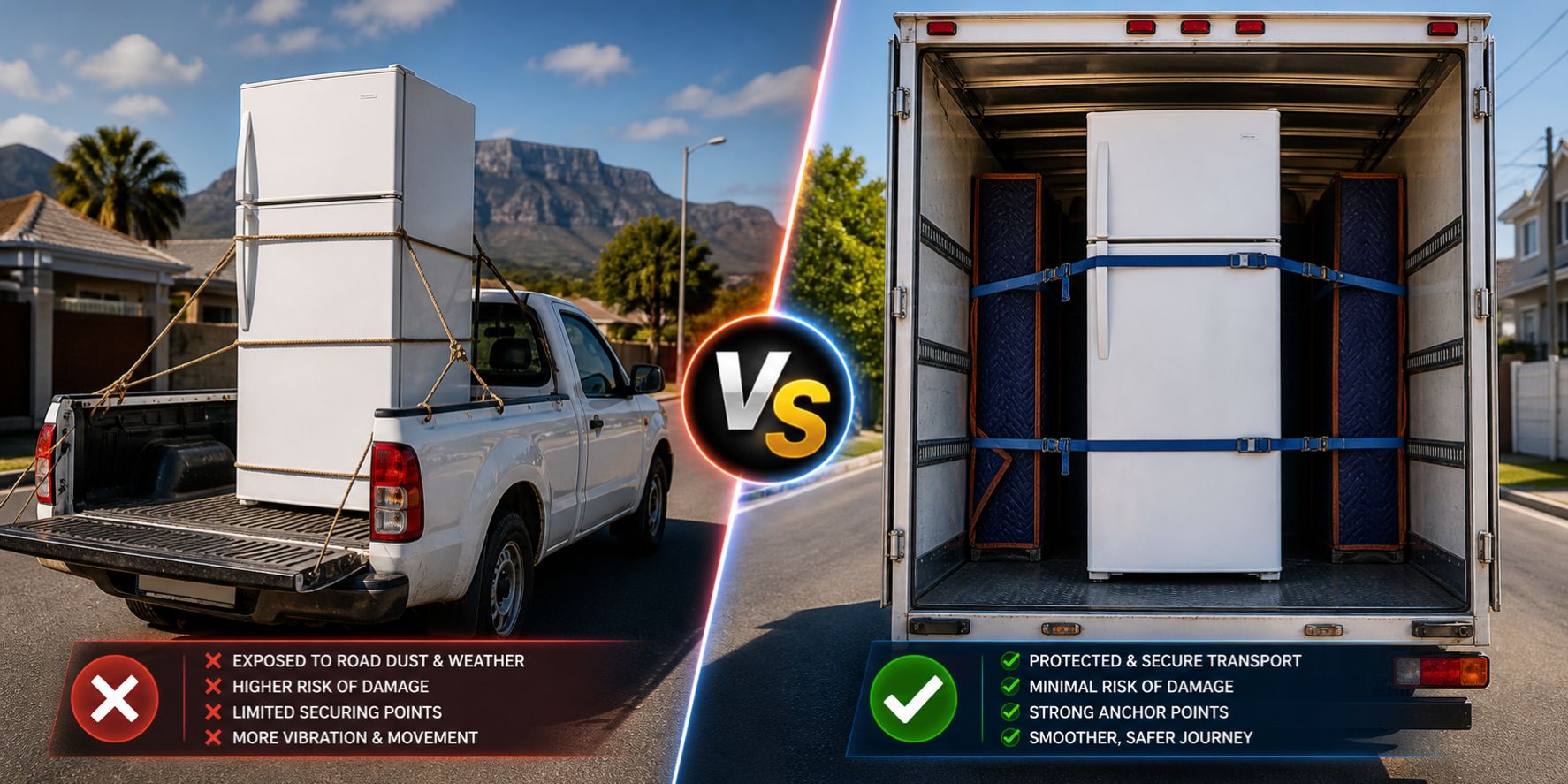
The bakkie is the default option across South Africa for smaller moves, and it works within limits. Knowing those limits is what separates a clean move from an expensive repair.
| Factor | Bakkie | Moving truck |
|---|---|---|
| Cost | Lower upfront | Higher, typically all-in |
| Upright transport | Difficult for fridges over 150 cm | Full internal height available |
| Securing options | Limited tie-down points, open sides | Anchor rails, enclosed walls |
| Road exposure | High: open load bed, vibration, wind | Controlled: enclosed, padded |
| Risk of damage in transit | Higher | Significantly lower |
| Best suited for | Small undercounter or bar fridges, short distances | Full-size, double-door, or American-style fridges and any distance over 30 km |
Loading on a bakkie: Transport the fridge upright. Use ratchet straps through the bakkie’s anchor points: two straps minimum, one across the upper third and one across the lower third of the unit. Place moving blankets between the fridge body and any exposed metal on the load bed or side rails. Open bakkie beds transmit significant road vibration directly into the appliance. That vibration, combined with lateral movement, is what causes compressor mounting damage on longer journeys.
For any fridge over 150 cm tall, a bakkie is the wrong vehicle. The centre of gravity is too high relative to the load bed sides. A proper moving truck is worth the additional cost.
Can You Transport a Fridge Laying Down?
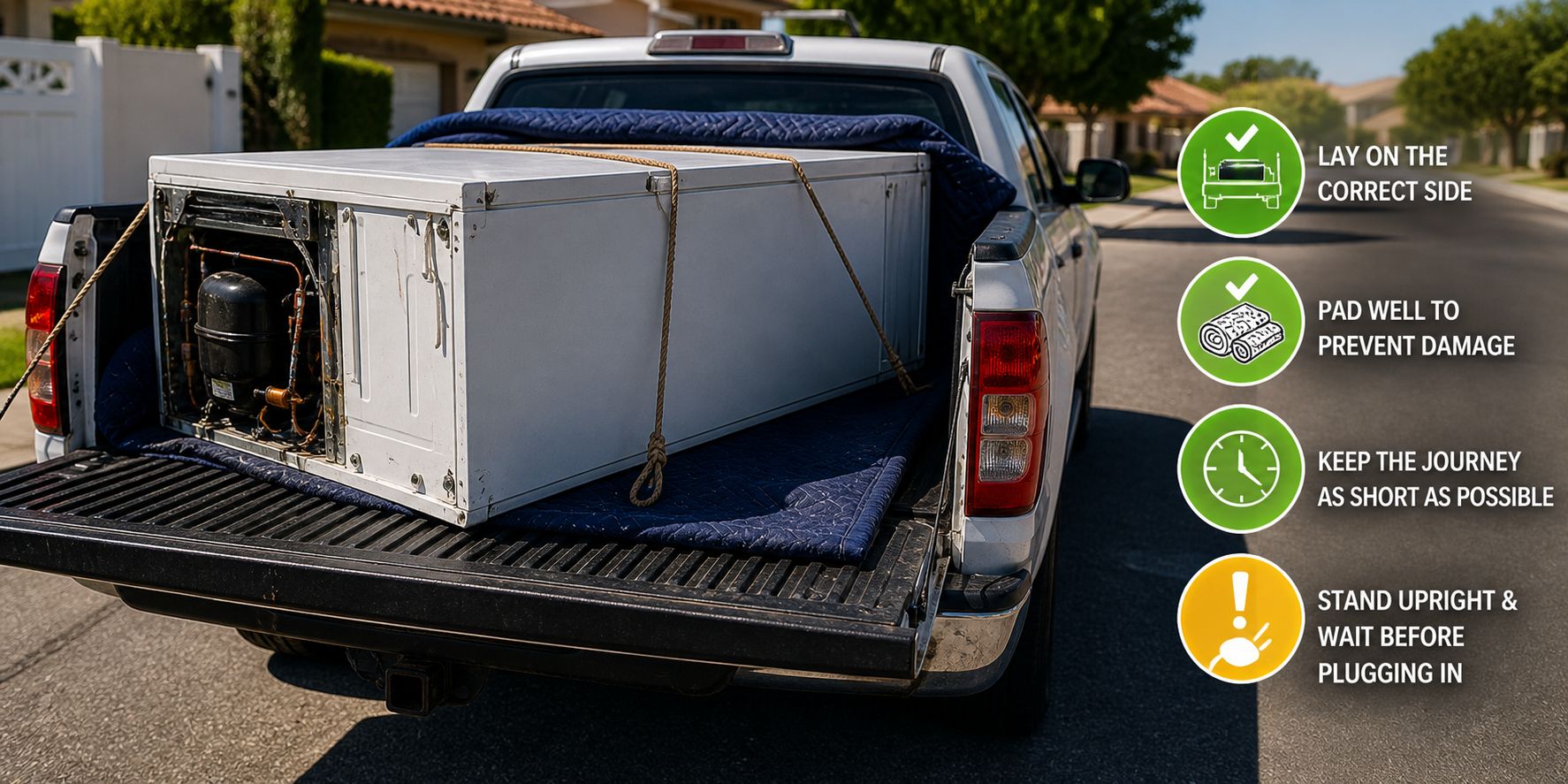
You can, but under specific conditions. This is not something to do casually, and understanding the mechanics is important.
The compressor in every fridge sits in oil. That oil lubricates the compressor’s internal components and stays in the base of the compressor housing when the unit is upright. When you lay the fridge on its side, that oil migrates out of the compressor and into the refrigerant lines. If you plug the fridge in before the oil has drained back, the compressor runs without adequate lubrication and fails.
This is not a fringe scenario. It is the predictable, mechanical outcome of ignoring the wait period, and it happens regularly after DIY moves.
A replacement compressor for a mid-range South African fridge runs from R2,500 to R8,000, not including labour. For a premium imported model, considerably more.
If laying down is unavoidable:
- Lay it on the compressor side, not the hinge side. Check your manual to confirm which side is correct. It is almost always opposite the hinge side, but verify for your specific model.
- Pad the surface heavily. A bare bakkie bed will dent and scratch the cabinet during the journey.
- Keep the journey short. Under 2 hours is manageable. Several hours significantly increases risk.
- Stand it upright immediately on arrival. Do not leave it on its side at the destination.
- Follow the wait time guidance below before plugging in. Without exception.
How Long to Wait Before Plugging In Your Fridge After Moving
This is the most consistently ignored instruction in fridge transport, and the one that generates the most avoidable damage.
| Transport method | Minimum wait time upright before plugging in |
|---|---|
| Upright the entire journey | 1 to 2 hours |
| On its side for under 1 hour | 4 to 8 hours |
| On its side for several hours | 24 hours |
| On its side overnight or for a long-distance move | 24 to 48 hours |
When in doubt, err toward the longer estimate. An extra 12 hours of waiting costs you nothing. A burned-out compressor costs you thousands. The oil needs time to drain back into the compressor housing. That is not negotiable, regardless of how urgently you need the fridge running.
Once you do plug in, the fridge should reach operating temperature within 2 to 3 hours. If the compressor is running continuously after that period but the unit is not cooling, switch it off immediately and contact a refrigeration technician. Continuous operation without cooling accelerates the internal damage significantly.
When to Hire Professional Movers
Call professionals if any of the following apply:
- Double-door or American-style fridge: At 90 to 120 kg, two untrained people without specialist equipment cannot move it safely.
- Stairs at either end: The most common cause of serious injury in DIY appliance moves.
- Move over 50 km: Increases oil migration and vibration damage risk significantly.
- Fridge under manufacturer warranty: Many warranties require professional handling for transit damage claims.
- History of back, shoulder, or knee injury: NIOSH research identifies heavy load carrying as a primary musculoskeletal injury risk (CDC/NIOSH).
Need professional help for your move? Megashift Logistics use purpose-built appliance trucks, trained two-person teams, and proper appliance dollies on every job. Get a free quote and we will tell you honestly whether you need us or not.
5 Mistakes That Cause the Most Damage
These are the patterns we see most consistently when a fridge arrives damaged or stops working after a DIY move. Every one of them is avoidable.
Mistake 1: Moving a fridge that has not fully defrosted. Ice adds dead weight and guarantees water damage inside the transport vehicle. That meltwater soaks through cardboard boxes, warps wooden furniture, and damages flooring. Defrost completely, at least 24 hours or up to 36 hours for large freezer compartments, as rushing this step is one of the common errors people make, similar to other moving mistakes to avoid during relocation.
Mistake 2: Moving without an appliance dolly.
Every crew that says “we’ll just carry it” regrets that decision at some point, usually at a corner, a step, or when someone’s grip goes. A proper appliance dolly costs R150 to R250 to rent for a day. It is the difference between a controlled move and a back injury.
Mistake 3: Laying it flat and plugging it in immediately.
This is the most reliable way to destroy a compressor. If the fridge was on its side for any length of time, the oil needs time to drain back into the compressor housing. The wait times in the table above are based on that physical reality. Follow them.
Mistake 4: No floor protection along the route.
One pass of a fridge on an unprotected tile or laminate floor. That is all it takes. Lay hardboard or thick cardboard the full length of the route before anything moves.
Mistake 5: One person attempting a full-size fridge.
This is not a question of strength. Controlling a 70 to 90 kg object on a dolly through doorways, around corners, and over thresholds requires two people: one to steer, one to guide and catch. Alone, the first obstacle becomes a problem with no good solution.
Conclusion
Moving a fridge may seem simple, but without proper tools and experience, it can lead to damage or injury. At Megashift Logistics, we handle appliances with care, using the right equipment and methods. Our professional team ensures a safe, efficient move, saving you time, effort, and stress while protecting your valuable appliance.
Frequently Asked Questions
1. How to move a fridge safely?
Use a dolly, keep it upright, secure with straps, and move with two people.
2. Can I transport a fridge on its side for 30 minutes?
Yes, if needed. Let it stand upright 4–6 hours before plugging in.
3. How long should a fridge be off before you move it?
At least 24 hours to defrost and dry properly.
4. What are common fridge moving mistakes?
Not defrosting, laying it wrong, no dolly, moving alone, plugging in too soon.
5. Can I move a fridge without a dolly?
Not recommended. Use sliders and extra help only on flat floors.
6. How long to wait before plugging in a fridge?
1–2 hours upright, 4–24 hours if laid down.
7. Should I hire professional movers?
Yes for large fridges, stairs, or long-distance moves.
Recommended Posts

7 Moving Tips and Tricks You Should Know
March 31, 2026

How to Safely Pack Fragile Items for Moving
January 30, 2026

10 Expert Moving Tips for a Stress-Free Move in 2026
November 3, 2025