
Shared Load Moving: Pros, Cons, and Everything You Need to Know
 Abel
Abel You are moving house, but you do not have enough stuff to fill an entire truck. Does that mean you have to pay for the whole thing anyway? Not with shared load moving. You share the truck with other customers heading the same way and only pay for the space your belongings actually take up. It is one of the most practical ways to move long distances in South Africa without blowing your budget.
Here is everything you need to know before you move.
What Is Shared Load Moving?
Shared load moving means your belongings travel in the same truck as other customers who are moving in a similar direction. Each person’s goods are wrapped, labeled, and secured in their own section of the truck. Nothing gets mixed up. You simply pay for your share of the space.
It works especially well for one- to three-bedroom homes moving between provinces. Instead of paying for a full truck you never fill, you pay a fair price for what you actually use.
The Pros and Cons
|
Pros |
Cons |
|---|---|
|
Save 40 to 60% compared to a dedicated truck |
You get a delivery window, not a fixed time |
|
Pay only for the space your stuff actually takes up |
Less control over exact pick-up and drop-off times |
|
Your goods are wrapped, labelled and secured separately |
Slight delays can happen due to multiple stops |
|
Most operators include real-time tracking |
Not the best fit for very large households |
|
Fewer trucks on the road means a smaller carbon footprint |
Consolidation fees may apply on certain routes |
Understanding the Cons
No fixed delivery time
You will receive a delivery window of a day or two rather than an exact hour. The truck makes several stops along the route, which makes precise timing tricky. Just build a buffer into your plans, and it will not cause any stress.
Less control over timing
Your collection and drop-off are planned around the full route, not just your schedule. If you need total control over timing, a dedicated truck gives you that at a higher cost.
Small chance of delays
Road conditions and extra stops can occasionally shift your delivery slightly. A good operator keeps you updated throughout and this rarely becomes a real problem.
How Does It Compare to Other Moving Options?
| Feature |
Shared Load |
Backload |
Dedicated |
|---|---|---|---|
|
Cost |
Pay for space used |
Cheapest option |
Full truck price |
|
Speed |
2 to 5 days, multi-stop |
Variable |
Fastest, direct route |
|
Flexibility |
Moderate |
Need flexible dates |
Fixed date, full control |
|
Best for |
1 to 3 bed inter-prov. |
Long distance on budget |
Large homes or deadlines |
If your budget is the main priority and you can stay flexible on timing, shared load and backload are both solid choices. If you have a firm move-out deadline or a large household, a dedicated truck gives you more certainty.
How the Process Works
- You share your inventory and get a quote based on volume and distance.
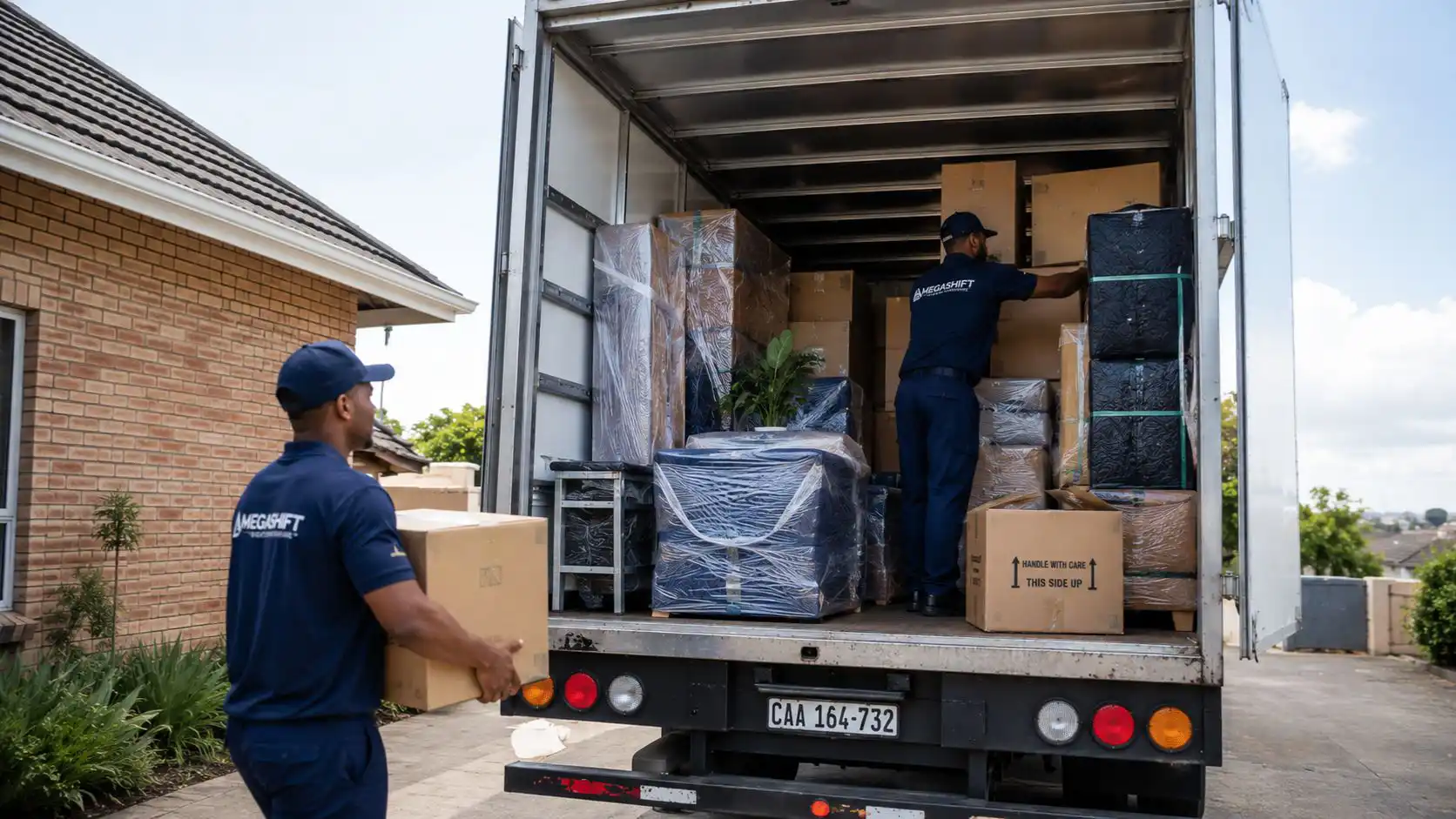
- A collection date is set. Movers arrive, wrap your items and load them into your labelled section of the truck.
- A written inventory is signed at collection. This is your record for the whole move.
- The truck follows a planned route and picks up other shipments along the way.
- You receive updates during transit so you always know where your things are.
- Delivery happens within your confirmed window and the inventory is checked off on arrival.
Your goods never come into contact with another client’s belongings. The separation between shipments is not optional. It is part of how the service is designed.
5 Tips to Get the Most Out of It
- Declutter before you book. The less volume you move, the lower your quote.
- Label every box with your name and the destination room.
- Book 3 to 4 weeks in advance to lock in your preferred dates.
- Ask about transit insurance, especially for anything valuable or fragile.
- Request an itemised quote so you know exactly what is included and what is not.
- If you are moving large appliances, prepare them properly before collection day. Check our guide on how to move a fridge safely to avoid damage during transit.
Frequently Asked Questions
Is shared load moving safe?
Yes. Every client’s goods are wrapped, labelled and secured separately. A professional operator completes a full written inventory at both collection and delivery so everything is accounted for.
How long does it take?
On major routes like Johannesburg to Cape Town, expect two to five days. Your operator will confirm your delivery window when you book.
How much does it cost in South Africa?
Local moves usually cost R1,000–R5,000, while long-distance moves range from R6,000–R25,000+. Furniture removal costs in South Africa depend on distance and load size.
What is the difference between shared load and backload?
A shared load combines multiple customers in one trip, while a backload uses a returning truck for lower pricing. A shared load moving costs guide explains the cost difference further.
Final Thoughts
Shared load moving is a smart way to save money when you do not need a full truck. It offers a practical balance between affordability, safety and convenience for long-distance moves across South Africa.
With regular inter-provincial routes, MegaShift Logistics provides secure, compartmentalised moving services handled by trained professionals and backed by goods-in-transit insurance.
If you are planning a move and want a clear quote with no hidden costs, get in touch with us today.
Recommended Posts

Hiring a Local Moving Company
January 20, 2023

8 Types Of Moving Services
October 7, 2020